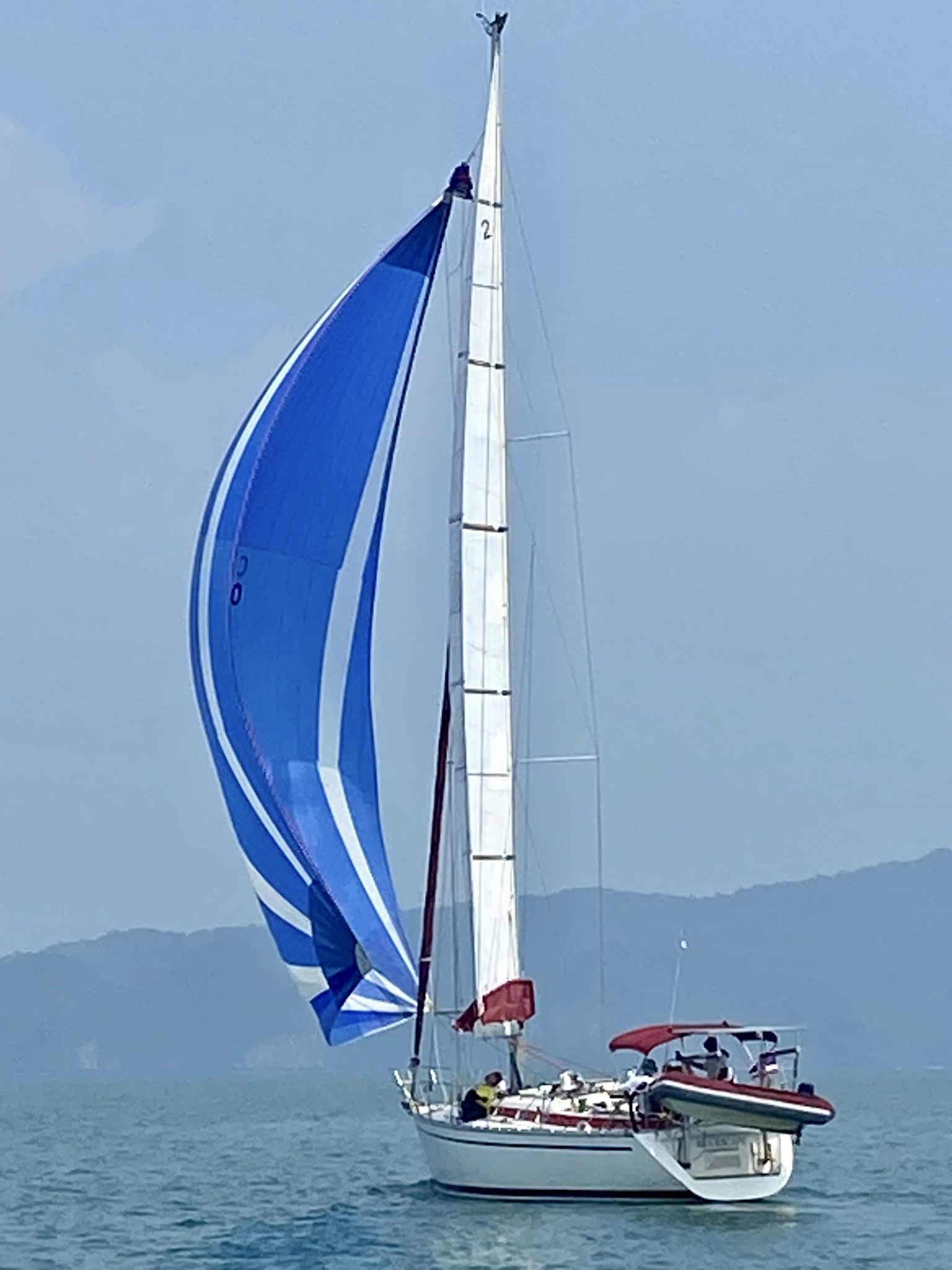
 Hello, welcome to my website, my name is Claude Vedovini and I used to be a freelance software consultant and a digital nomad working exclusively remotely, while roaming the world. Now I am retired in Phuket, Thailand. I used to share my experience on this blog, as a web developer and as a traveler but now this part of my life is over.
I truly enjoyed working with Claude. He has a very impressive broad knowledge on J2EE architecture. He knows even the future ;-)
You can learn a lot from/with him. He always helps team members. As an architect he will provide practical, scalable and up to date solutions.
I can only […]
Claude is an exceptional software professional. Incredibly sharp, fast moving, confident and goal directed. Having people such as Claude in a team makes life of a manager so much simpler.
Claude is a recognized expert in Java technologies and helped design the current product roadmap. He is friendly, open and reliable, and an excellent team-mate.
Claude is a very efficient and recognised collegue. I have never worked with him but always heard the best of his professionalism. His efficiency has improved more than one of his collegues
Claude ability to lead the technical team and envisage daring solutions for our multiple software packages is matched by his wide views on technology, current as well as future.
He’s interested in finding the needs of his peers and meets their respective businesses’ expectations.
Stefan
Very smart guy who knows what he is talking about. Enjoy working with him and learn from his advices.
I needed someone who could deliver a new strategic web application , I had tight deadlines and needed somebody who could build working software and fast. Claude was quick at understanding my business needs and as it turned out definitely one of the most agile , professional and pragmatic […]
Claude has proven quick, efficient, clever, determined and professional in his role as webmaster to our organization. I am pleased to recommend his services.
I know Claude for many years, since the early days of the R&D Architecture Committee back in 2001 actually.
I remember many of our discussions of that golden period where we were planning new product lines nearly from scratch. He was a very valuable contributor to this effort.
The notion of […]
Claude has an excellent knowledge of Java technologies. He has been the referent for several years at Odyssey. He also has strong functional and technical analytic skills which yields to effective proposals and a good balance between business functionalities and technical design.
In addition […]
Simply brilliant! It is a pleasure to work with such a professional and talented person as Claude, and I did really appreciate his human qualities and … unique sense of humour ;-)
Rock on, dude!Anonymous
Claude has very high standards for design and implementation of robust, reusable and largely scalable software systems.
Whatever Claude taught about C++ and COM programming has helped me many times in my career.
Claude has a very good knowledge of J2EE environment. He’s always available to give help with clear explanations.
Claude’s main issue is that he is right too often, compared to other human beings, but once you get used to this fact it is a real pleasure to work with him ;)
IT is not only a job for him but a passion. This makes him a great addition to any team.
Claude is an impresive architect and developer. Committed to the delivery, he actively contributes to solution definition. He’s an important contributor to technical decisions thanks to his knowledge and capacity to analyse a new domain. He’s the kind of software architect that you appreciate […]
Claude was the best reference at Odyssey for all these years
Claude was a very innovative and smart software architect in Odyssey R&D. His technology expertise was very valuable, and brought a lot of innovative ideas into the product. He was also a very helpful colleague, always ready to answer to questions and recommend solutions. He was not only able […]
Claude is a software architect with exceptionally strong technical and analytical skills which allow him to work on very complex software projects. Moreover he is a very good team player and coach and is very committed to achieve project goals.
Claude is an impressive J2EE architect, his knowledge on IT Culture is excellent. He’s always available for supporting you and customers and provide detailed and structured analysis.
Claude is a reference person around the J2EE world: strong skills, professional, rigorous and efficient. he is friendly and always available
to help and give advice to his colleagues
Claude is a quality-minded senior developer, with very high analytical skills and such an outstanding technology background that he can support every programmer.
When motivated by a theme, he will be so productive that you think he works 24/7, when he is not so motivated he will challenge […]
Claude is extremely knowledgeable in his area of expertise. He was a key person in the project and in this role Claude was reliable, efficient and hard worker.
Claude has demonstrated impressive knowledge of IT and of various Web tools. He has an excellent understanding of business needs and a creative problem solving approach. His constructive and professional attitude allows for an effective and personable collaboration. He has developed an […]
I would like to raise especially one quality that Claude has, which is vital in our industry, often underestimated and not necessarily given to any architect: His professionalism and calmness to work on complex problems in emergency and high pressure situations, be it when solving client […]
Claude is both an expert and a strong contributor. His indepth knowledge of all the aspects from the persistence to the front-end and his strong understanding of the business makes him the natural leader and reference for his peers. Working with him is a great pleasure and always an enriching […]
Claude has a very good knowledge of the product architecture and is a reference for his colleagues.
I worked with Claude for 1 year, I enjoyed his unusual combination of skills and talents in both Project Management and New Technology Development. He has an excellent understanding of business needs and a creative problem solving approach. At the same time he is very dependable, eloquent and a […]
Claude is a highly skilled IT expert, with a very broad IT culture. He is passionate about his job and will always search for the best technical solution using his great design and coding capacities.
To complete the picture, he works amazingly fast and delivers code as other people would just […]
Claude is definitely a reference for any question related to J2EE architecture. During the years he spent at Odyssey , he always supported pro actively and efficiently the on site consultants by providing advices and technical designs greatly appreciated by his colleagues and by the clients . […]
Outstanding software engineer. Open-minded. Both quick and lasting.
I worked 6 years with Claude. He is clever and has a broad technical knowledge. He put in place a very good software architecture. As a developer he is one of the most productive guy I ever met. His designs are among the best I saw. You can say that he is an expert. I wish him all the best for […]
Claude is very serious in his job; he points solutions other colleagues didn’t thought about. I appreciate and recommend him.
I had the pleasure to work with Claude for 3 years. His extensive knowledge and analytical mind makes him the ideal person to tackle complex problem and find the best solution. Confronting ideas and design with him will always lead you to improvement and knowledge gain.
Claude a réalisé un projet novateur pour la RTS. A partir d’un cahier des charges très ouvert, il a su choisir les meilleures solutions pour arriver au résultat voulu.
One thing I admire most about Claude is his indepth technical knowledge of the subject he is working on and he has got a very good command and understanding of the technology be it Eclipse based (JDT, EMF, GEF, Plugin Architecture) or Enterprise Java. You approach him with any technical […]
Claude is definitely a very strong software developer. He’s smart, delivers great results fast, and he’s a great person to work with. I would highly recommend him.
Claude was key in the design of the foundations of our core J2EE product. He can be proud of what he created. His wide range of technical abilities combined with an impressive practical working expertise will surely be missed. Claude is pationate, pragmatic and curious about lots of subjets, he […]
I definitely recommend Claude if you look for a professional. I am impressed with his ability to anticipate the needs of users and to come up with the best solutions. It is very clear that he has an incredible experience which is very helpful for any startup or digital project. Claude is […]
Claude is the best developper I ever worked with
Very good skills.. Smart and competent..hard worker..
Claude thinks in solutions, not in problems. He is usually two steps ahead of the crowd which makes him an outstanding analyst and Java expert. Although he delivers code incredibly fast, he pays special attention to a smart design, a robust architecture, complete documentation and in-depth […]
I truly enjoyed working with Claude. He has a very impressive broad knowledge on J2EE architecture. He knows even the future ;-)
You can learn a lot from/with him. He always helps team members. As an architect he will provide practical, scalable and up to date solutions.
I can only […]
Claude is an exceptional software professional. Incredibly sharp, fast moving, confident and goal directed. Having people such as Claude in a team makes life of a manager so much simpler.